How to Use the Mark HTML Element for Contextual Relevance and SEO Clarity
Technical SEO
Leverage Semantic HTML by implementing the section element to allow search engines to more easily understand the structure of your content
Schedule a Call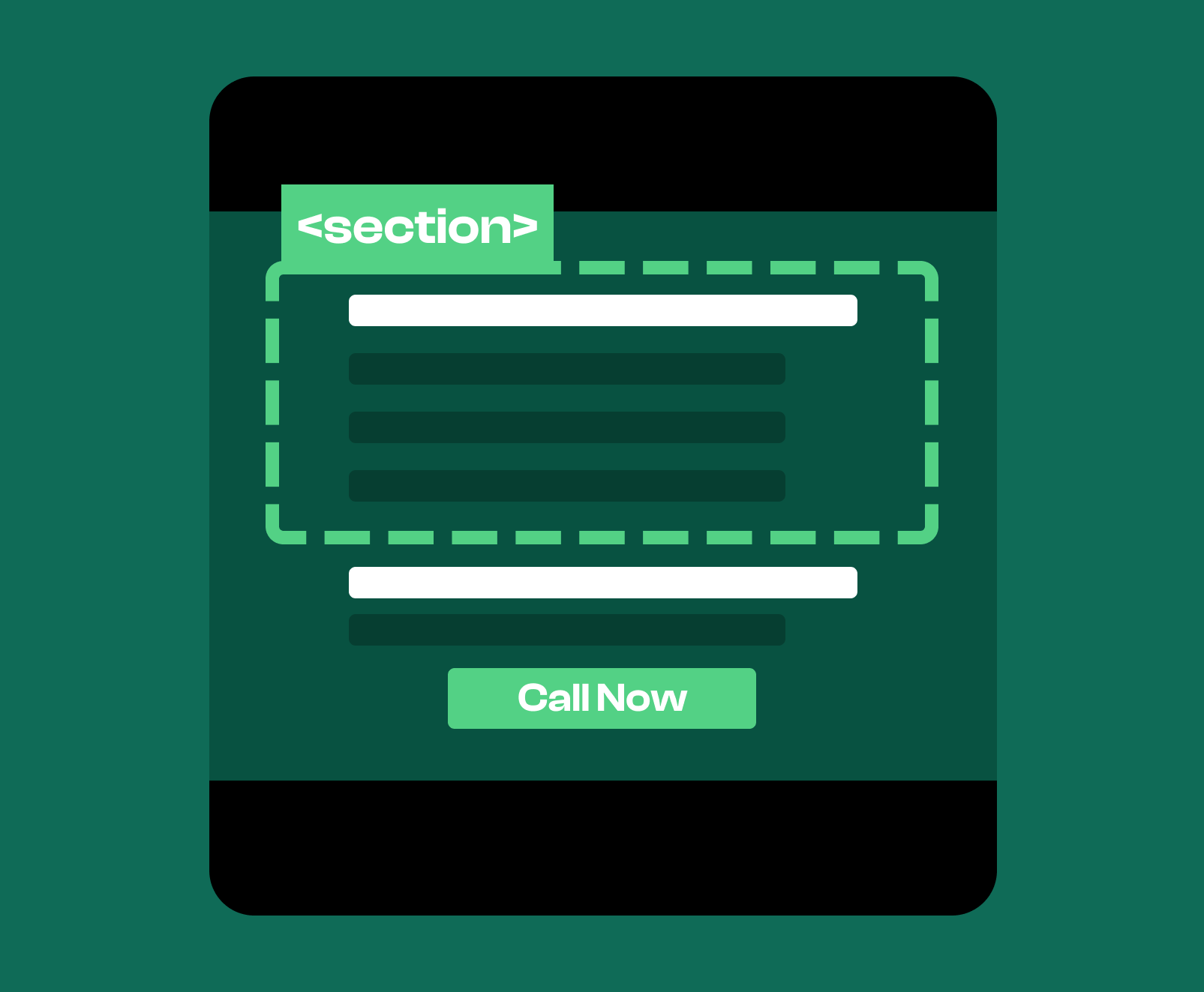
The section element represents a thematic grouping of related content within a page. It introduces a meaningful division in the document where each section typically represents its own topic or subtopic. Sections help create structure, define boundaries, and guide both readers and search engines through the flow of information.
Use the section element when a block of content has a clear thematic purpose that deserves its own subheading and internal hierarchy. A section usually contains a heading that labels the topic it introduces. Sections are used to organize long or complex documents so that each major thought or subject has a clearly designated space.
To search engines, each section signals a distinct topic or theme inside the context of the page. This helps crawlers understand how the document is organized and how each subtopic relates to the main subject. Proper use of section improves semantic clarity, enables more accurate summaries, and helps search systems determine the importance of various parts of the document.
Content placed inside the section element should relate to a specific theme or subtopic. Each section should feel cohesive and purposeful, containing content that supports the heading associated with it. Sections are most valuable in long or detailed documents where clarity and structure improve comprehension.
A section should contain the content necessary to explain or expand on the subject introduced by its heading. It does not have to be a standalone article, but it should have enough substance to form a meaningful block of information that feels whole, consistent, and tightly related to the heading above it. Typically, they’ll be included in the main element, but they can also be placed outside of it to house or contain boilerplate content.
You'll also typically include header elements in most section elements. While this isn't always true, most sections will have headings, copy, assets, and other thematically related content. Head over to our page to learn why header tags are so important.
Using the section element correctly improves the readability of your document and strengthens its internal logic. It communicates topic boundaries to search engines and makes your content easier to parse, summarize, and evaluate. Clear sectioning helps AI systems understand how each part of the content contributes to the page as a whole and makes your page more eligible for enhanced search features and better visibility. This is the primary reason why it is so important to leverage semantics in your HTML structure instead of placing everything inside of the dreaded ‘div soup’.