How to Use the Mark HTML Element for Contextual Relevance and SEO Clarity
Technical SEO
Understand what an aside tag is so you can utilize it and communicate more clearly with search engines regarding what content is primary and what is supplementary
Schedule a Call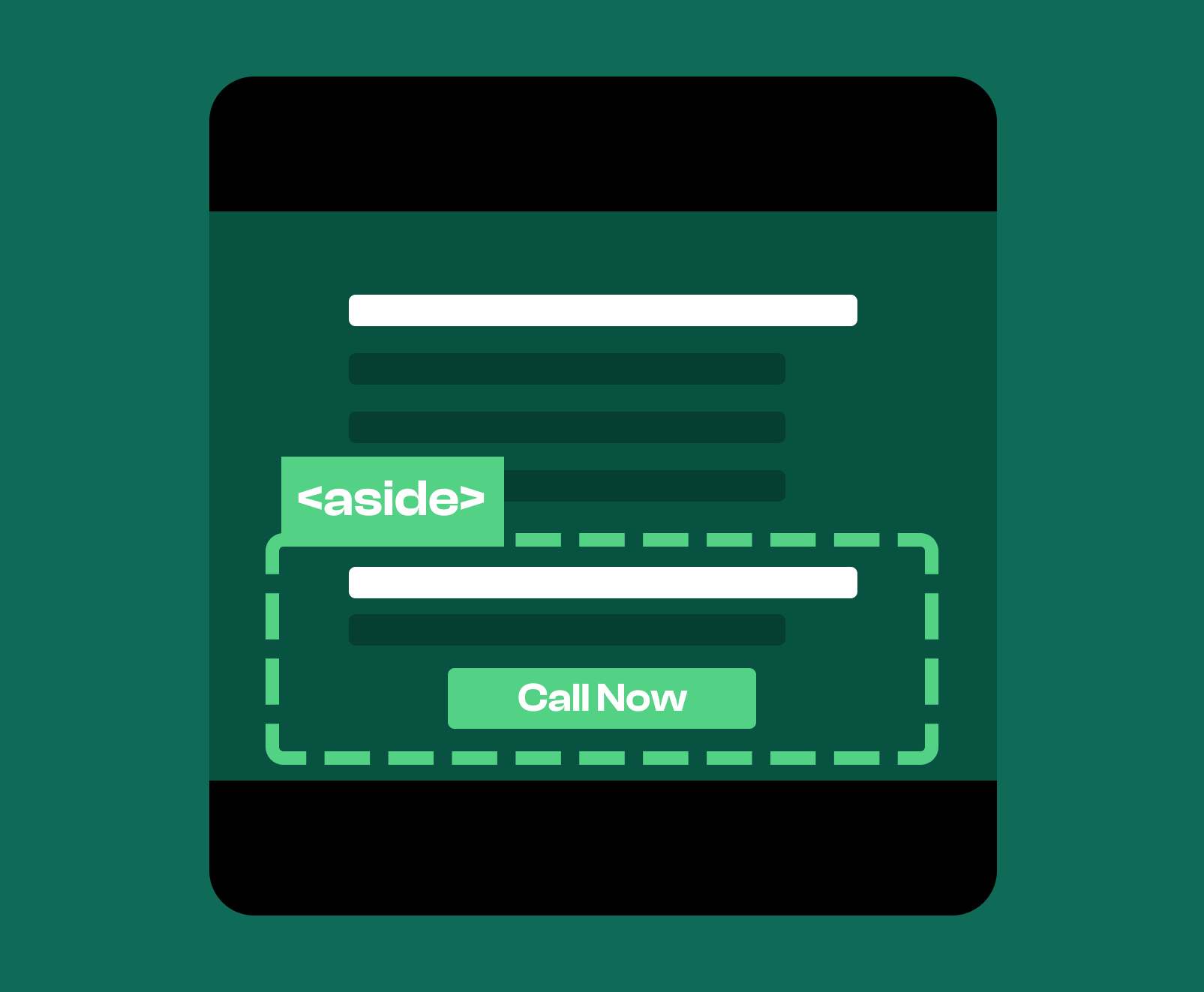
The aside element is a semantic HTML tag used to identify content that is related to the main topic of the page, but not central to it. It serves as a container for supplementary information that improves the clarity and understanding of the primary topic without taking focus away from it. Using the aside element helps establish clear boundaries between core and supporting content, improving both comprehension and overall content structure.
You use the aside element when you want to present information that is secondary to the main content on the page. This could be within an article, alongside a blog post, beside a product description, or anywhere additional context would be useful but should not interrupt the flow of the page. Asides are often found in sidebars, next to body copy, or embedded in longer articles where brief related notes add value without disrupting the main topic.
The aside element tells search engines that the content inside it is supportive and not part of the primary topic of the page. This helps search engines understand which material should be prioritized when determining the relevance of the page as far as rankings go. It also helps reinforce topical clarity by making it clear which parts of the content should be treated as supplementary additions rather than primary material. This separation improves how search engines interpret the meaning and focus of each section.
Author bios placed inside an aside help search engines recognize that the biography is informational and not part of the main topic. Including a short author section in an aside also helps users understand the expertise behind the content without distracting from the primary narrative of the page.
Related links placed in an aside element help users navigate to supporting resources while remaining separate from the main focus of the page. This allows search engines to understand that these links are meant to guide users and not help define the intent of the primary topic.
Supporting definitions are great in an aside tag because they provide helpful clarity without interrupting the primary focus of the page.
Pull quotes placed in an aside help highlight key insights without skewing the main context of the page. Using asides for quotes in this way helps the text get treated as emphasis that supports the page rather than text that defines and shapes the main points the page focuses on.
Aside elements used for small promotional blocks signal to search engines that these items shouldn’t be considered in the relevance scoring of the page itself. This helps ensure promotional content doesn’t reduce your relevancy, but instead shows search engines that the text inside is just to help users move forward with your services.
Contextual references belong in an aside because they provide optional background or insights external to your domain, while at the same time not shifting the focus of the main content. This helps maintain clarity of topic while still presenting additional useful information to readers.
The main benefit of using the aside element is the increased semantic clarity it brings to your content. Using semantic structures like this helps define the structure of your page in a way that humans and search engines can both interpret with ease. By placing secondary or supplementary content in an aside, you prevent it from interfering with the meaning and authority of your main material. This improves accessibility, strengthens SEO signals, and produces cleaner layouts that are easier to read and evaluate.
If your goal is to make your content easier for search engines to parse, interpret, and rank, we can support you. Our technical SEO approach improves markup quality, enhances semantics, and ensures your pages send clear relevance signals to AI and search. Reach out and we’ll help you improve your site’s technical performance and long term visibility.