Title in Semantic HTML and How Document Structure Is Defined
Technical SEO
Learn how the <mark> HTML tag highlights contextually relevant phrases without affecting structure. Improve UX and semantic clarity in search results.
Schedule a Call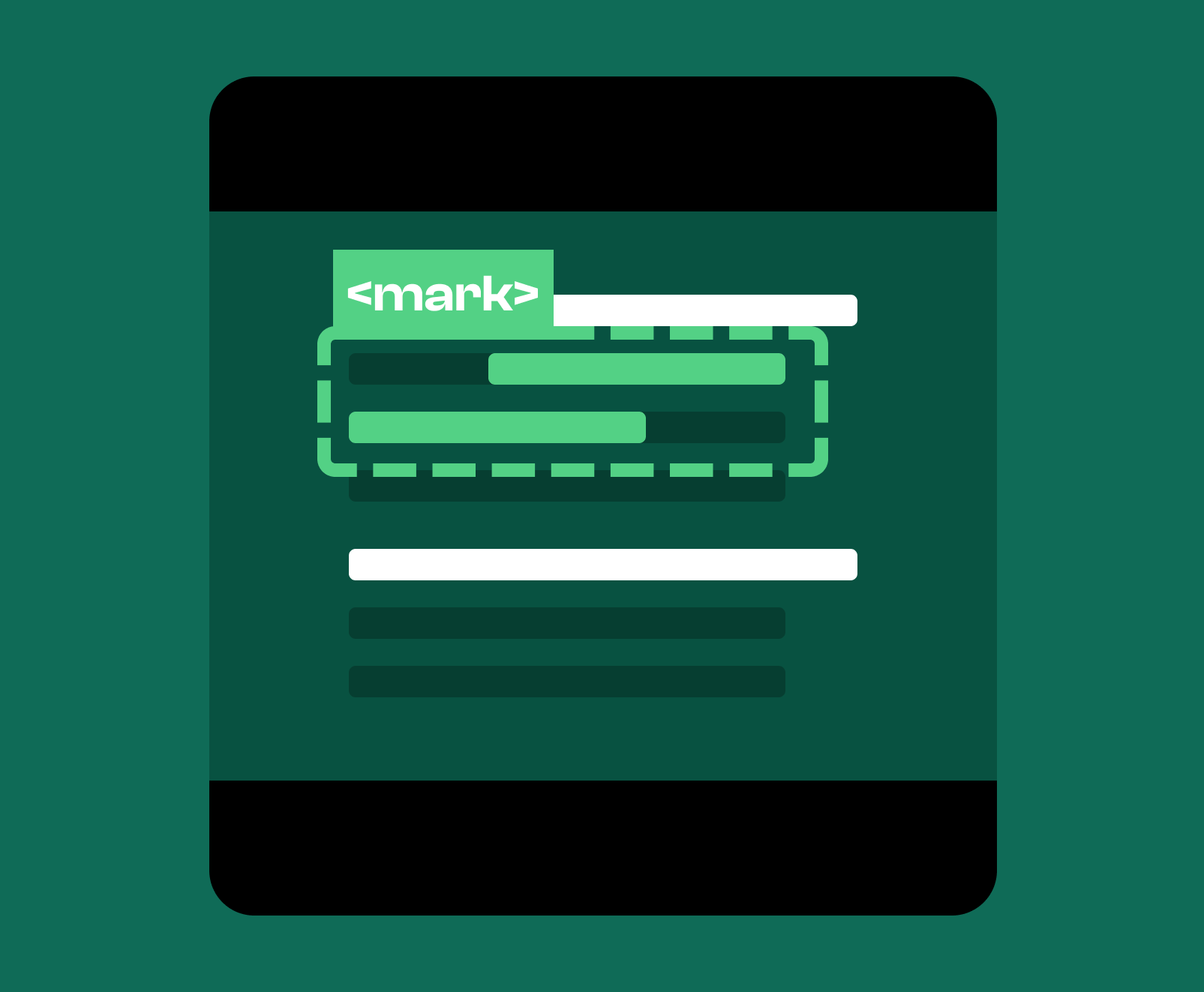
The mark element is an inline HTML tag used to highlight text that is contextually important within a specific user interaction. It signals that a word or phrase is relevant to the current topic, query, or task, without changing the structure or meaning of the surrounding content.
A mark tag is an inline Semantic element best used inside paragraphs, lists, or other inline text where you want to emphasize information that matters in the current context. Common use cases include highlighting search terms in results, emphasizing recently updated information, or calling out phrases that directly answer a user’s question.
The mark element helps reinforce contextual importance, not hierarchy or emphasis. It tells search engines that a specific phrase is meaningful within the current scope, which can support semantic understanding when used correctly. It does not replace headings, schema, or strong tags, but it can complement them by clarifying relevance at the sentence level.
Only put text inside the mark element if adding emphasis to it will improve contextual clarity.
Use mark for brief phrases, keywords, or concepts that deserve attention without interrupting the reading flow. By highlighting them in this way, users will see the visual emphasis added to the word and understand there is additional importance or significance to it.
If a phrase directly maps to what a user is trying to find, understand, or compare, it’s a good idea to mark it.
Overuse or misuse of the mark element reduces its value and can confuse both users and crawlers. By marking too much text, the mark element will lose its value, and users and crawlers alike will instead begin to ignore it.
Highlighting large blocks defeats the purpose. The mark element is meant to be used very sparingly, not blanket across whole groups of text.
Never mark menus, footers, breadcrumbs, layout elements, and other navigational or boilerplate content.
Headings already carry structural meaning. Marking headings just creates redundant signals.
If the text offers no contextual relevance, importance, or clue for your user, it is not worth marking. Marking should not be used for design-specific reasons.
Marking text that doesn’t serve the user’s goal weakens semantic clarity.
The mark element reinforces alignment between user queries and visible content by highlighting relevance at the phrase level. It supports better scanability, improves UX in search contexts, and contributes to more precise semantic interpretation by search engines.
If your content needs stronger intent mapping and extractable structure, our SEO team can help you implement the details that make that happen.