How to Use the Mark HTML Element for Contextual Relevance and SEO Clarity
Technical SEO
Learn what the article element is, how it strengthens your site’s structure, and why semantic HTML helps search engines and AI better understand your content. Improve clarity, relevance, and long term SEO performance.
Schedule a Call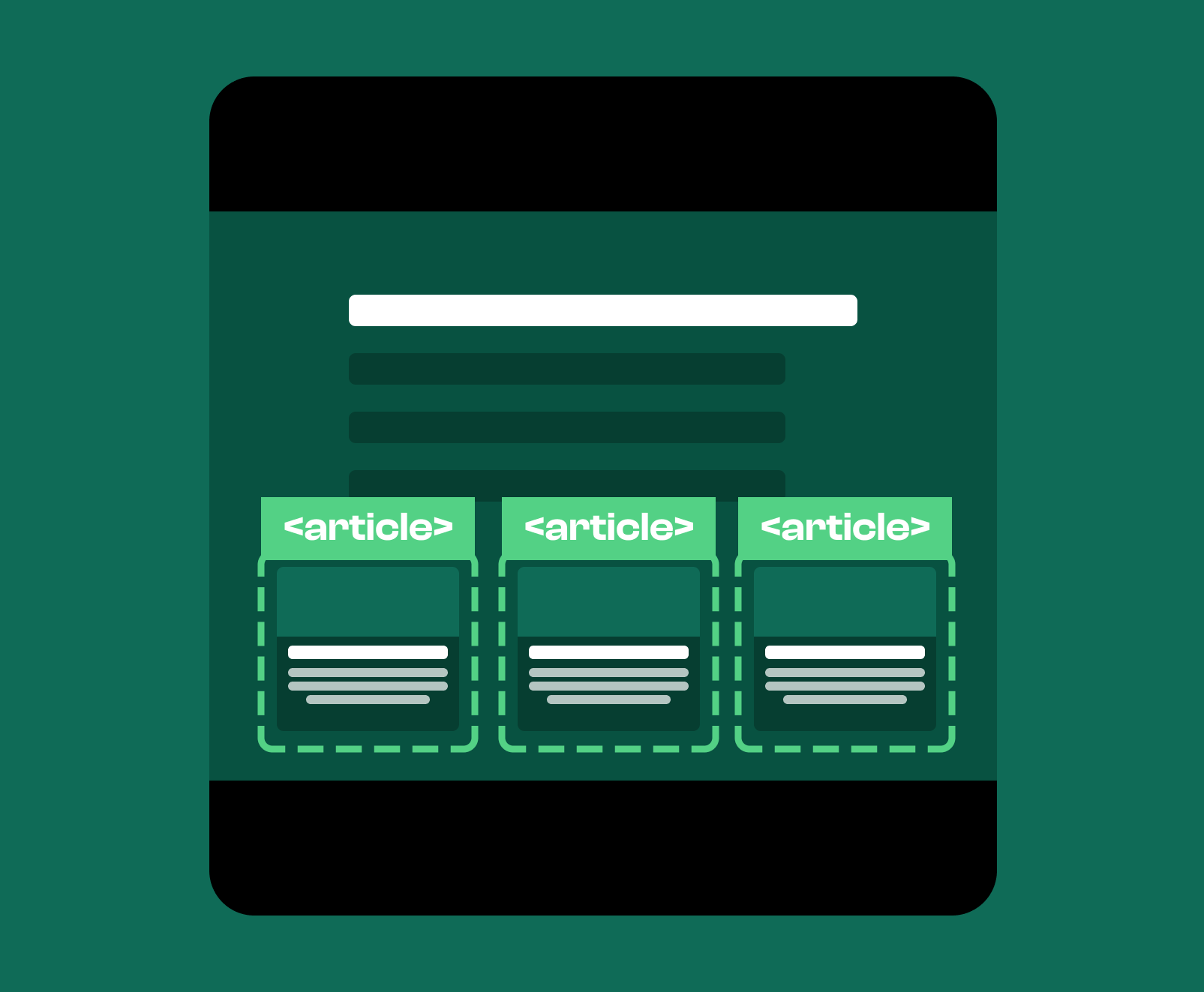
The article element is a semantic HTML element that represents a complete, self contained piece of content that makes sense on its own. It is used for material that can be independently distributed, referenced, or reused without depending on the rest of the page. Articles help define clear topical boundaries and give both users and search engines a strong signal that the content inside them has standalone value.
The article element is used to enclose content that could exist as a separate document or publication. It is ideal for blog entries, news stories, product descriptions, technical explanations, or any unit of content that has its own internal structure and meaning. Unlike generic containers, the article element explicitly declares that the information inside it is complete and not merely a fragment of a larger topic.
You use the article element when your content has a clear beginning, middle, and end, and when that content can be shared or referenced outside the context of the page it appears on. Blog posts, documentation entries, case studies, and independent write ups all belong inside article elements. They may be nested inside sections for large collections of content, but each article stands on its own as a coherent resource.
To search engines the article element conveys that the content contained inside is a fully developed resource that deserves individual evaluation. It signals that the content is substantial, topic-driven, and relevant enough to stand independently. This helps ranking systems identify which parts of your page carry direct informational value and which parts simply support navigation or layout. Because articles represent complete thoughts and topics, search engines often treat them as primary units of meaning when determining relevance.
The article element should contain content that forms a complete, self sufficient narrative or explanation. The content placed inside an article tag should make sense on its own and have enough context for readers to understand it without relying heavily on surrounding content.
Content previews may be included inside the article element when an article is part of a feed or listing. Content previews function as condensed introductions that help readers quickly identify what the full article contains. They still count as part of a standalone piece because they relate directly to the primary topic of the article itself.
Standalone content is the core purpose of the article element. This includes posts, guides, tutorials, case studies, whitepapers, or any unit of content that represents a complete and meaningful idea. The article element ensures this material is treated as an independent resource rather than a structural piece of the larger page.
Using the article element improves the overall semantic clarity of your page. It allows search engines to understand which content is meant to serve as a primary informational unit and which content is merely supportive. Articles also increase accessibility because assistive technologies can identify them as coherent blocks of information. By organizing your site with article elements in the right places, you strengthen the structure of your content, make your topics easier to interpret, and increase the likelihood that your work is recognized as a valuable standalone resource.
One of the main benefits of using this element is that it helps search engines and AI understand the distinct topics and entities on your page, ensuring the primary context remains clear rather than getting lost within supporting or unrelated material.
If you are building content like this and want to improve how search engines interpret and rank your pages, you can learn more about my SEO services where I help businesses apply these same principles to enhance visibility, structure, and long term authority.
If you want help improving the way your website communicates with search engines and modern AI systems, we offer SEO services that focus on building clear structure, stronger topic boundaries, and a more meaningful on page hierarchy. Clean semantic HTML plays a major role in how well your content is interpreted and how confidently it can rank, and implementing it correctly can make a measurable difference in your visibility. If you want to refine your site’s structure and apply these principles to your own business, you can learn more about our SEO services where I walk through the same methods I use across every project to improve clarity, relevance, and long term performance.