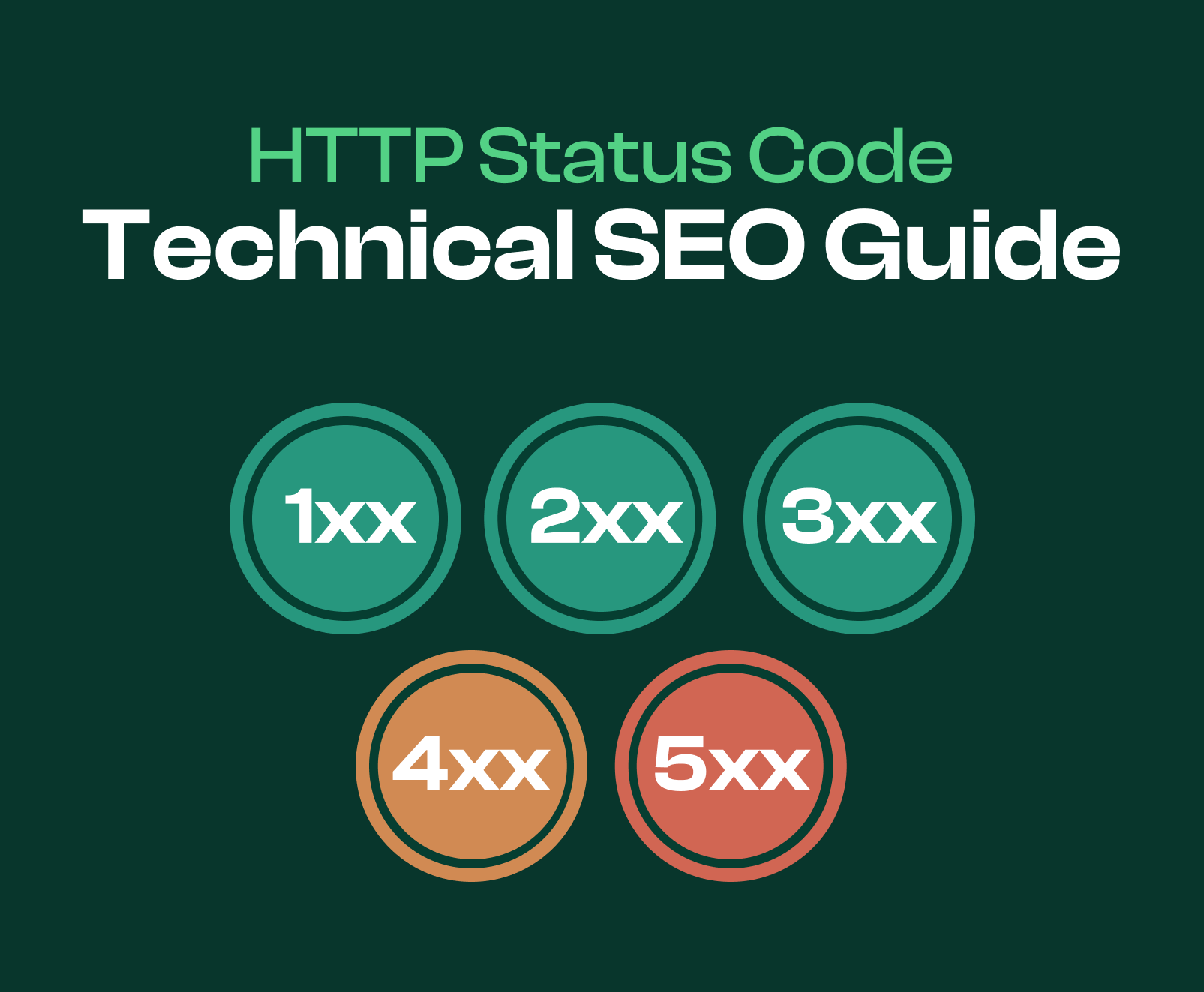
HTTP status codes are one of the most foundational technical signals a website sends to search engines. Every time a crawler or browser requests a URL, the server responds with a status code that communicates what happened to that request. These responses influence crawling behavior, indexing decisions, link equity flow, and overall site health. For technical SEO, status codes are not a background detail. They are a primary control mechanism for how search engines interact with a website. A useful tool to handle restructuring, the passage of link equity, and more.
What HTTP Status Codes Are and Why They Matter for SEO
HTTP status codes are server responses that indicate whether an HTTP request was successful, redirected, failed, or if it encountered a server issue, what the issue was. Search engines rely on these signals to determine if content should be indexed, re-crawled, removed, or treated as temporarily unavailable. When status codes are incorrect or inconsistent, search engines may waste crawl budget, misinterpret page intent, or remove URLs from the index you may not want removed. Using proper status codes creates clarity between your site and search engines, which is vital for long-term growth.
How Search Engines Interpret HTTP Status Codes
Search engines do not interpret all status codes equally. Some codes provide clear and stable signals, while others introduce uncertainty. Search engines do not trust a website unless it emits signals of stability. A consistent pattern of correct responses allows crawlers to make confident decisions about indexing and ranking. Frequent errors or ambiguous redirects force search engines to re-test URLs repeatedly, slowing down discovery and weakening trust signals. Over time, this can impact crawl efficiency and visibility site-wide.
HTTP Status Code Categories Explained
HTTP status codes are grouped into five primary categories, each with a distinct meaning for crawlers and users. Understanding these categories helps clarify how search engines process different site states and errors.
- Informational responses
- Successful responses
- Redirection responses
- Client error responses
- Server error responses
1xx Informational Responses and Crawling Behavior
Informational responses indicate that a request was received and is being processed. These codes are rarely used in SEO and generally have minimal impact on indexing or rankings. In most cases, they appear as part of internal server communication rather than user-facing or search engine-facing.
2xx Successful Responses and Indexing Signals
Successful responses signal that a request was completed correctly. The most common of these is the 200 OK status, which tells search engines that a page exists and is ready to be indexed. Pages that consistently return 200 responses are able to be ranked as long as other quality and relevance factors are met too. Incorrect use of 200 responses, such as serving error pages with a success code, can confuse search engines and lead to index pollution.
3xx Redirection Codes and Link Equity Transfer
Redirection responses indicate that a requested resource or document has moved to a different location. Search engines treat permanent and temporary redirects differently, especially when it comes to transferring ranking signals. Proper redirect usage will ensure that authority, relevance, and crawl paths are preserved during site changes, migrations, or URL restructuring.
4xx Client Errors and Crawl Efficiency
Client error responses indicate that a request could not be fulfilled due to an issue with the URL or request itself. These errors help search engines understand which pages no longer exist or cannot be accessed. While occasional 4xx errors are normal, widespread or misused client errors can waste crawl budget and weaken site quality signals.
5xx Server Errors and Index Stability
Server error responses indicate that the server failed to fulfill a valid request. These errors are often temporary but can become damaging if they persist. Repeated 5xx responses can cause search engines to reduce crawl frequency or temporarily remove URLs from the index until stability is restored.
HTTP Status Codes That Impact SEO the Most
While all status codes have meaning, some play a much larger role in SEO decision making due to how frequently they appear and how strongly they influence indexing behavior.
200 OK and Index Eligibility
A 200 OK response tells search engines that a page exists and is available for indexing. This is the expected response for live, indexable pages. Serving a 200 response on pages that should not be indexed, such as soft error pages or expired content, can create confusion and dilute site quality.
301 Moved Permanently and Ranking Signals
A 301 redirect signals that a URL has permanently moved to a new location. Search engines use this signal to transfer ranking equity and update indexed URLs. When implemented correctly, 301 redirects preserve authority and consolidate signals. Poorly implemented chains or loops can slow down crawling and weaken signal transfer.
302 and 307 Redirects and When to Use Them
Temporary redirects like the 302 Found and the 307 Temporary both indicate that a URL change is not permanent. Search engines may continue to index the original URL while testing the destination. These redirects are useful for short term changes but can cause ranking instability if used incorrectly for permanent moves.
404 Not Found vs 410 Gone
A 404 response indicates that a page does not exist, while a 410 response explicitly states that the page has been permanently removed. Search engines treat 410 responses as a stronger signal for removal from the index. Choosing the correct response depends on whether the content may return or is intentionally retired.
500 Internal Server Error
A 500 Internal Server Error occurs when the server encounters an unexpected condition while handling a request and no more specific error is returned. These errors are commonly caused by application crashes, server configuration issues, or exceed limits. From an SEO perspective, occasional 500 errors are usually not a major concern, but frequent or persistent 500 errors can negatively impact crawl efficiency and reduce Google’s confidence in your site’s reliability, which may limit its ability to rank.
503 Service Unavailable and Maintenance Windows
A 503 response tells search engines that a page is temporarily unavailable due to maintenance or server load. When paired with proper retry signals, this status helps prevent premature deindexing during downtime. Misusing 503 responses outside of maintenance scenarios can negatively affect crawl behavior.
HTTP Status Codes Explained Individually
Beyond the most impactful codes, each individual status code provides a specific instruction to crawlers. While not every code requires deep SEO consideration, understanding their purpose helps diagnose edge cases and unexpected crawl behavior. This includes less common responses related to partial content delivery, authentication requirements, and protocol limitations.
1xx Informational Responses and Crawling Behavior
Informational responses indicate that a request was received and is being processed. These codes are rarely used in SEO contexts and generally have minimal direct impact on indexing or rankings. In most cases, they appear as part of internal server communication rather than user facing or crawl critical scenarios.
2xx Successful Responses and Indexing Signals
Successful responses signal that a request was completed correctly. The most common of these is the 200 OK status, which tells search engines that a page exists and can be indexed. Pages that consistently return 200 responses are eligible for ranking as long as other quality and relevance factors are met. Incorrect use of 200 responses, such as serving error pages with a success code, can confuse search engines and lead to index pollution.
3xx Redirection Codes and Link Equity Transfer
Redirection responses indicate that a requested resource or document has moved to a different location. Search engines treat permanent and temporary redirects differently, especially when it comes to transferring PageRank. Proper redirect usage ensures that authority, relevance, and crawl paths are preserved during site changes, migrations, or URL restructuring. Utilizing proper 3xx redirects will also prevent 404 errors, which is a negative ranking signal in and of itself.
4xx Client Errors and Crawl Efficiency
Client error responses mean a request could not be fulfilled because of an issue with the URL or request itself. These errors help search engines understand which pages no longer exist or cannot be accessed. While the occasional 4xx error is normal, multiple 4xx errors or misused client errors can waste crawl budget and weaken site quality signals. Having a few pages that return 4xx errors will not hurt your rankings, but if left unchecked, and a few turns into dozens, you will see negative impacts across your eligible queries.
5xx Server Errors and Index Stability
Server error responses indicate that the server failed to fulfill an otherwise valid request. These errors are often temporary but can become damaging if they’re persistent. Repeated 5xx responses can cause search engines to reduce crawl frequency or even completely remove URLs from the index until stability is restored.
Common SEO Issues Caused by Incorrect Status Codes
Incorrect status code usage often leads to technical SEO issues that are very difficult to diagnose without proper auditing. Examples include soft 404 pages returning 200 responses, redirect chains that dilute authority, and error pages being included in sitemaps and getting indexed due to improper handling. Over time, these issues can compound and reduce overall site efficiency.
How to Audit HTTP Status Codes on a Website
You can audit HTTP status codes by crawling the site to identify response patterns across URLs. Crawling your website in this way helps you to find broken links, misconfigured redirects, and server errors. Regular audits are especially important during migrations, redesigns, or large content updates, where structural changes can introduce hidden issues.
How to Fix Status Code Issues Without Harming SEO
Fixing status code issues requires aligning technical changes with what search engines expect to encounter. Permanent changes should use permanent signals, temporary changes should remain clearly temporary, and removed content should be handled and removed properly. Careful testing and assessments coupled with staged rollouts will help prevent accidental ranking loss during corrections.
Status Codes in Real World SEO Scenarios
In practice, status codes play a critical role during site migrations, content pruning, content consolidation, platform changes, and infrastructure upgrades. Each scenario requires deliberate decisions about how URLs respond so that search engines can follow changes without losing trust or context.
How HTTP Status Codes Fit Into a Technical SEO Strategy
HTTP status codes are not isolated technical details. They are foundational signals that support crawl efficiency, indexing accuracy, and ranking stability. When integrated into a broader technical SEO strategy, they help search engines understand site intent, prioritize important pages, and maintain long term performance.
Trust Your Technical SEO To The Professionals
HTTP status codes are one of the core technical signals we look at when improving site health and search visibility. When they’re handled correctly, they support clean crawling, stable indexing, and reliable ranking behavior. For local businesses competing in Grand Rapids, getting these fundamentals right prevents hidden technical issues from limiting growth. This is a key part of how our seo process works to ensure that content, internal links, and authority signals are able to perform without being held back by technical friction.